Community policing is built on a simple idea: that safety is not only a matter for the police, but something that communities and institutions shape together. In practice, this means that police officers do not just respond to incidents – they work alongside local authorities, community representatives and citizens to understand what affects everyday life and to find solutions together.
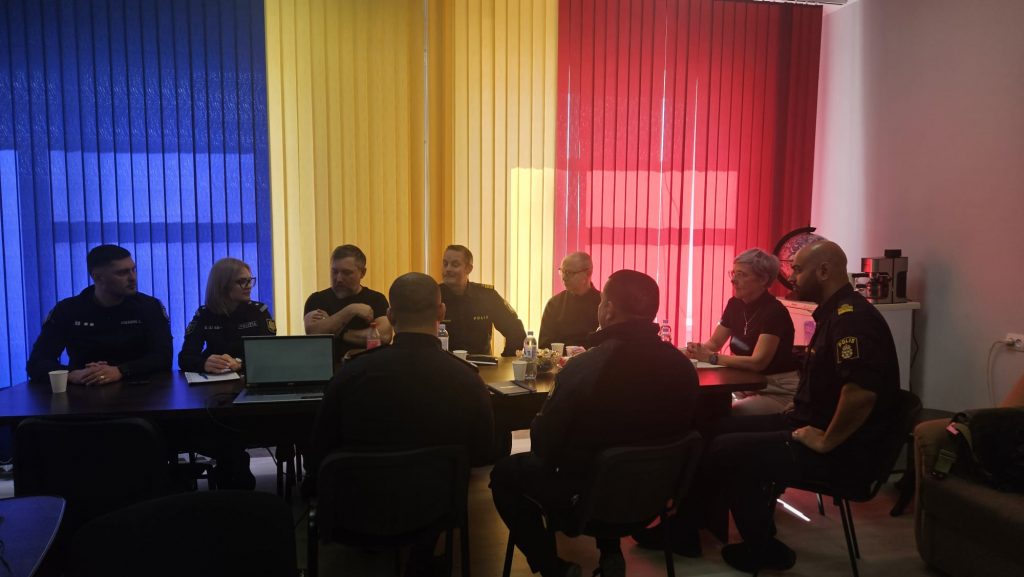
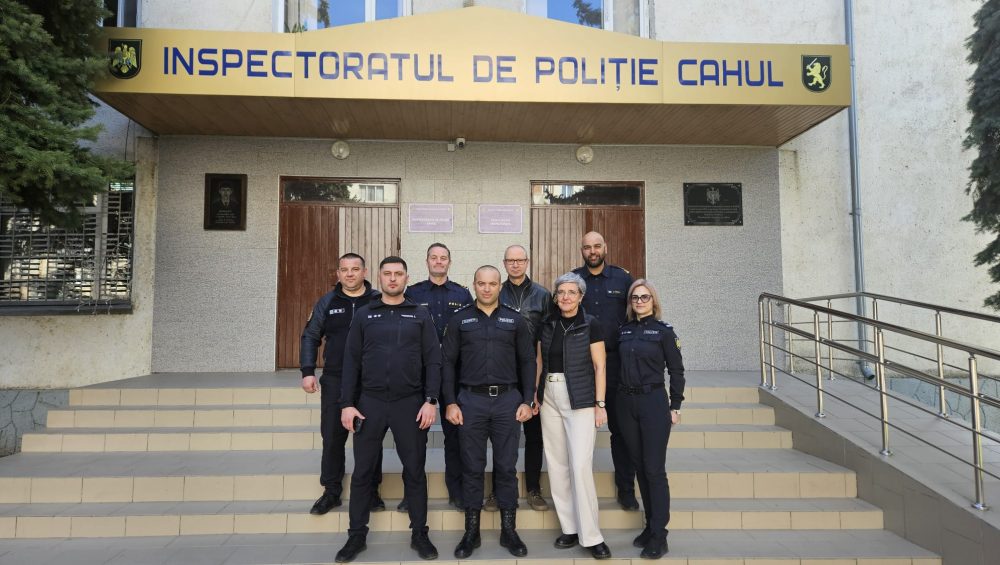
In Moldova, this approach is being developed through structures such as Community Security Councils and supported by national and international partners. In a recent exchange in Cahul, representatives from the General Police Inspectorate (GPI), a community policing project funded by the Swedish Government and GS-Foundation came together to discuss what cooperation looks like on the ground – and how community policing relates to the prevention of and the fight against domestic violence.
Community Security Councils as a local cooperation model
At the center of the discussion were Community Security Councils (CSCs) – local platforms established under Government Decision 100/2018 where police, the mayor’s office, social services, and community representatives meet to identify and respond to concerns affecting their area. The local police serve as secretariat, helping to document discussions and coordinate follow-up.
In Cahul, the approach has shown results. The city is considered one of the calmer areas in the region, with crime rates that have dropped noticeably over recent years. But what gets discussed in CSC meetings often goes well beyond crime. One telling example from Cahul: one of the most frequently raised concerns is overloaded trucks heading toward Ukraine, gradually destroying the roads in and around the city. It is a local problem that affects daily life – and one that requires a response from the municipality, not the police. That distinction matters, and it comes up regularly in community policing work across Moldova.
What happens after a problem is identified?
One of the central questions in the Cahul exchange was straightforward but important: what happens next? Once a CSC identifies a concern – whether it is road damage, vandalism or a lack of activities for young people – who takes responsibility, and how are solutions actually implemented?
The discussion highlighted that many issues raised in CSC meetings fall primarily under the responsibility of local municipalities. This makes coordination between institutions essential. It also raises broader questions about how communities can move from identifying a problem to actually addressing its root causes – for instance, whether the response to youth-related concerns should be surveillance, or investment in opportunities and activities.
The exchange also addressed domestic violence and SGBV, covered under a separate national programme running through 2027. A central question was how local structures such as CSCs can better support affected communities – and where the work of GS-Foundation and the Swedish-funded project can complement each other in practice.
Why GS-Foundation is in the room
For GS-Foundation, meetings like this one in Cahul are not about announcing programmes or presenting conclusions. They are about building a grounded understanding of how cooperation actually functions in Moldova’s regions – how different actors interact, where coordination between community policing and supporting the follow-up to the work of CSCs can create real synergies, and how community-based approaches can be strengthened in practice.
That is why GS-Foundation visited Cahul, Bălți, Comrat and other places – to understand how cooperation between institutions and communities actually functions, region by region.