Effective responses to domestic violence depend not only on laws and policies, but on how institutions interact in practice. Understanding these dynamics is the objective of the domestic violence mapping launched by the GS-Foundation under EQUALFORCE II, commissioned by the German Federal Foreign Office (GFFO).
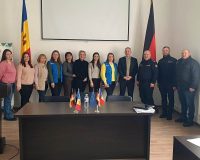
The GS-Foundation has launched the domestic violence mapping process with a kick-off meeting at the General Police Inspectorate (GPI) in Moldova.
The meeting brought together senior representatives of the GPI, including State Secretary Alexandru Bejan and Deputy Head of Police Alexandru Lupan, to establish a shared understanding of the scope, objectives and methodology of the mapping exercise. The exchange focused on expectation management and on ensuring clarity regarding roles, responsibilities and planned next steps.
Two GS-Foundation experts – Martin Mehlhorn, responsible for police and operational mapping, and Christiane Burrell, leading the legal mapping – presented their respective approaches. The mapping assesses institutional structures, operational practices, inter-institutional cooperation mechanisms and legal interfaces relevant to domestic violence cases.
By focusing on how systems function in real-life situations, the mapping provides a comprehensive, realistic and practice-oriented assessment of Moldova’s response to domestic violence. This assessment serves as a key foundation for the effective implementation of EQUALFORCE II, ensuring that reform efforts are evidence-based, coordinated and aligned with national frameworks.