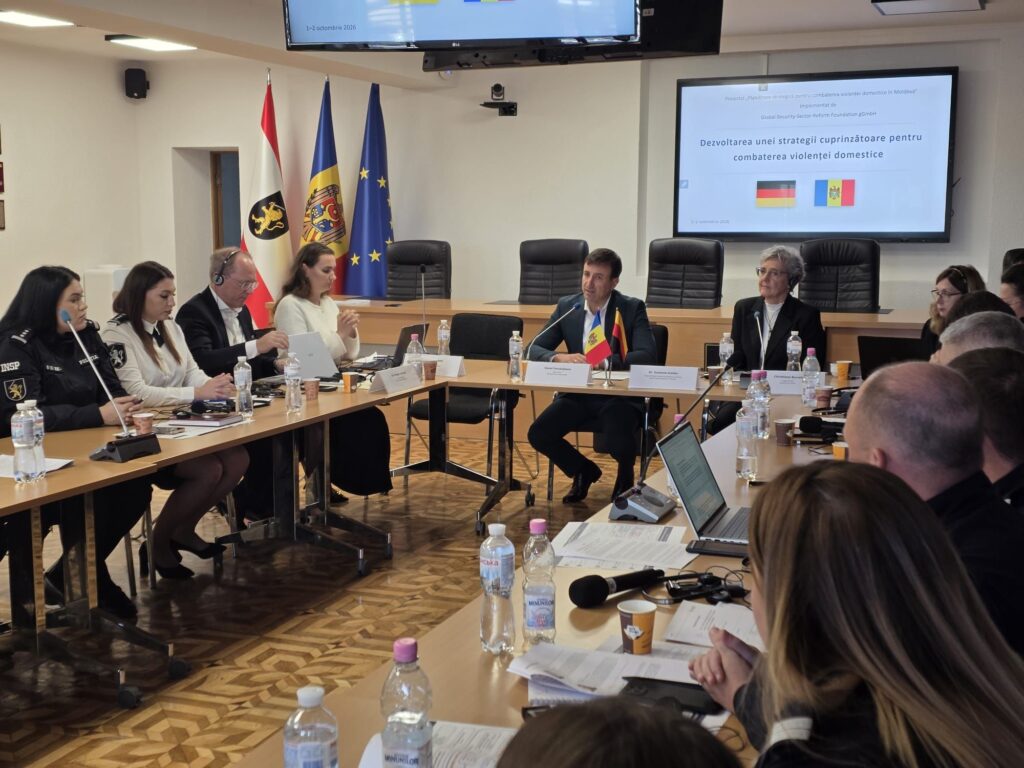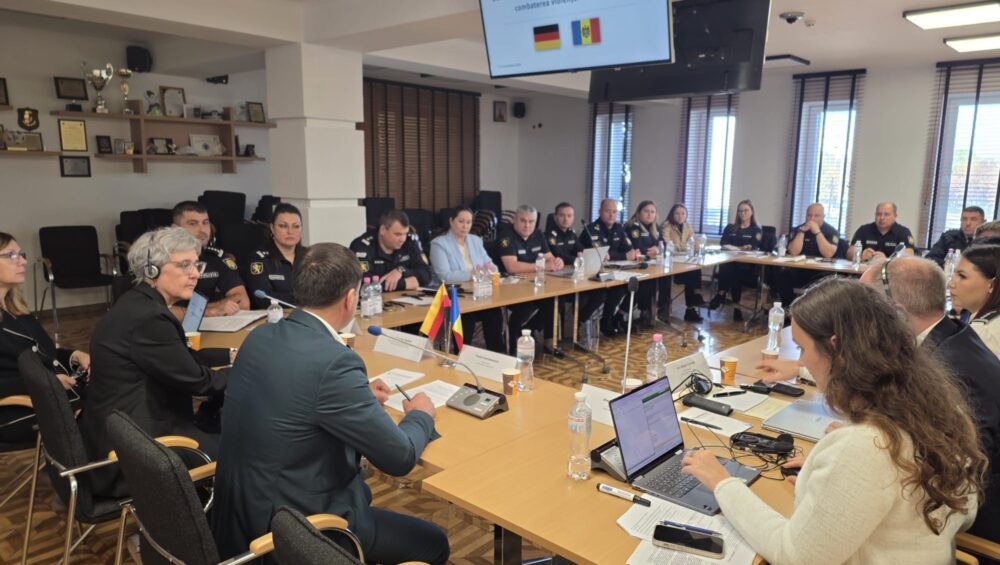
The GS-Foundation, through its EQUALFORCE II project, organised an intensive two-day workshop in cooperation with the General Police Inspectorate (GPI) of the Republic of Moldova. Bringing together operational police officers and senior leadership, the workshop focused on identifying gaps in protection, improving risk assessment and strengthening threat management in high-risk domestic violence cases. The exchange provided an opportunity to examine existing procedures, discuss operational challenges and identify concrete measures to improve the protection of individuals at risk.
Examining Operational Procedures and Protection Mechanisms
Together with police expert Holger Schmidt from Munich Police Headquarters, participants closely examined the operational handling of domestic violence cases, from the initial emergency call to 112 through police intervention and investigation to the implementation of further protective measures. By analysing actual workflows and drawing on practical experiences, the workshop provided valuable insights into how different stages of police intervention are connected and where potential gaps in protection may arise. Particular attention was paid to cases involving a high risk of escalation, where timely decisions, effective coordination and reliable information exchange are essential to preventing serious harm.
The discussions highlighted that Moldova already has a substantial legal and procedural framework for addressing domestic violence. However, ensuring that existing instruments are consistently and effectively applied in practice remains a key challenge. Participants therefore examined how established procedures could be better coordinated across different police structures, how responsibilities could be clarified and how available information could be used more effectively to support operational decisions. The exchange emphasised that strengthening victim protection does not necessarily require entirely new mechanisms, but also depends on improving the practical implementation and coordination of existing measures.
Improving Risk Assessment and Threat Management
A central focus of the workshop was the early identification of high-risk domestic violence cases and the development of effective operational responses to prevent further escalation. Participants explored how risk and lethality assessments can be translated into clear decisions and appropriate protective measures, particularly when cases involve multiple police structures or require continued monitoring. The discussions also addressed the importance of clearly defined responsibilities throughout the handling of a case, ensuring that relevant information is transferred effectively and that warning signs are not overlooked as cases progress through different stages of intervention and investigation.
Another key aspect was the transition from individual risk assessments towards more comprehensive threat management. This included examining how information from different sources can be consolidated to provide a more complete understanding of potential threats, as well as strengthening the focus on perpetrators, patterns of violent behaviour and indicators of escalation. By considering these factors together, participants explored opportunities to improve the identification of dangerous situations and support more proactive police responses. The practical exchange also highlighted the importance of continuous risk monitoring and cooperation between the institutions responsible for protection, intervention and case management.
Translating Findings into Practical Improvements
Building on the joint analysis, the workshop resulted in concrete proposals for strengthening police responses to high-risk domestic violence cases. These included improving internal workflows, clarifying operational responsibilities and further developing risk assessment and threat management procedures. Particular emphasis was placed on translating the lessons learned into future police training activities, ensuring that operational officers are equipped with the knowledge and practical tools required to recognise escalating risks and respond effectively. Participants also discussed opportunities to test and refine practical approaches within the EQUALFORCE pilot regions, creating a basis for assessing their effectiveness under real operational conditions.
The proposed next steps reflect an important development in the cooperation between EQUALFORCE II and the Moldovan police. While previous activities have contributed to identifying challenges and analysing existing procedures, the focus is increasingly shifting towards practical implementation and sustainable institutional improvements. Strengthening cooperation with other institutions involved in victim protection, monitoring and case management will remain an essential component of this process. By connecting operational findings with institutional development measures, the project aims to support more consistent, coordinated and effective responses to domestic violence across the relevant police structures.
Strengthening Institutional Ownership and International Cooperation
The workshop also demonstrated the importance of strong institutional ownership and close cooperation between operational police officers, senior leadership and international experts. The continued commitment of the Chief of the General Police Inspectorate to EQUALFORCE II and the advancement of this process at leadership level provides an important foundation for translating operational findings into lasting improvements. Sustained leadership support is particularly important when addressing challenges that require changes to established procedures, clearer institutional responsibilities and closer coordination between different organisational units.
The active participation of colleagues from the General Police Inspectorate and the National Public Security Inspectorate (INSP) contributed significantly to the discussions. By openly sharing their operational experiences, participants helped ensure that the analysis remained closely connected to the practical realities of police work in Moldova. The expertise provided by Holger Schmidt and Munich Police Headquarters further enriched the workshop, bringing valuable perspectives on risk assessment, threat management and operational responses to high-risk domestic violence cases. This constructive Moldovan-German exchange highlighted the benefits of combining international expertise with local operational knowledge to develop approaches that respond to the specific needs and institutional context of the Moldovan police.
Towards More Effective Protection Against Domestic Violence
Through EQUALFORCE II, the GS-Foundation continues to support the Moldovan police in strengthening their institutional and operational capacities to prevent and respond to domestic and gender-based violence. The workshop represents an important step towards improving the early identification of high-risk cases, strengthening coordination between police structures and developing more effective protection mechanisms. By focusing on practical improvements and sustainable institutional development, the cooperation seeks to ensure that existing legal and procedural instruments are translated into consistent and effective police action.
The overarching objective remains to strengthen the ability of police officers to recognise signs of dangerous escalation at an early stage, assess potential threats accurately and take decisive action to protect individuals at risk. Through continued cooperation, professional exchange and the implementation of practical measures, EQUALFORCE II contributes to developing more coordinated, responsive and sustainable approaches to preventing the most serious forms of domestic violence in the Republic of Moldova.