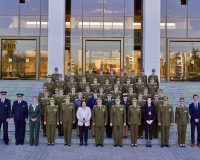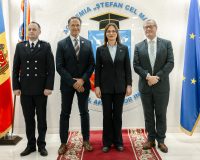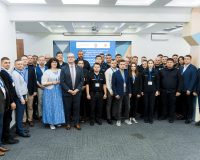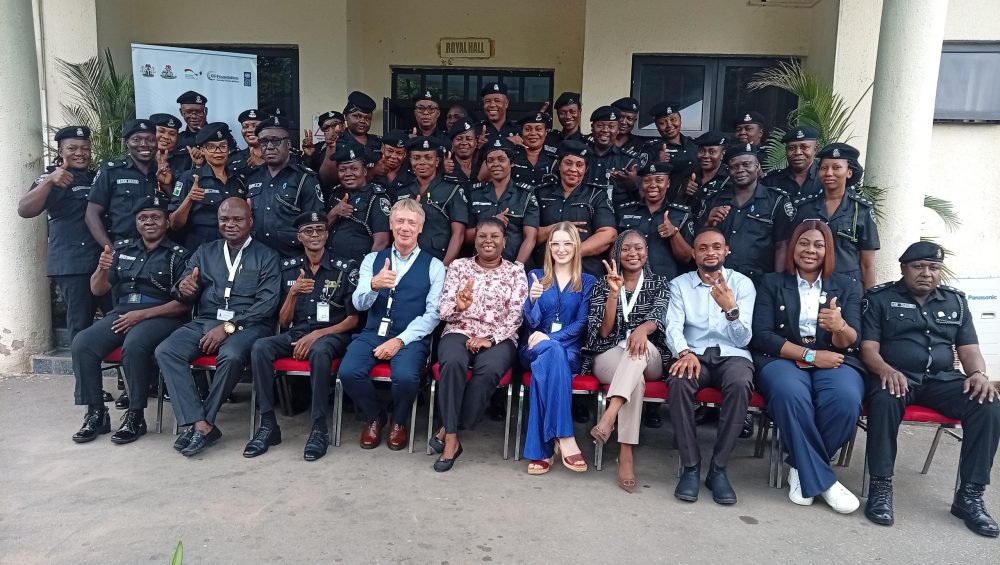
More than 50 trainers for so-called Gender Desk Officers, trained by the GS-Foundation and the United Nations Development Programme (UNDP), came together in Abuja in mid-June for a joint workshop. The aim of the event was to share experiences, further develop the quality of the training and strengthen the network of trainers in the long term.
Specialised training for sensitive investigations
Gender Desk Officers are specially trained criminal investigators and police officers who conduct investigations into sexual and gender-based violence. Due to the specific demands of this field of work, only experienced investigators are trained as trainers. They come predominantly from the Force CID Gender Unit and the Gender Focal Points of the Nigerian Police Force and will pass on their specialist knowledge to colleagues in future.
The more than 50 participants represented almost all ranks – from sergeant to chief superintendent. The majority of participants were women.
Exchange of experiences and professional development
For many of the newly certified trainers, the workshop was their first opportunity to exchange views with colleagues from across Nigeria on their experiences to date in delivering training. Whilst some had already conducted their first training sessions, others were still at the beginning of their new role.
The workshop therefore focused on issues of methodology and teaching techniques, the professional handling of traumatised victims, and current developments in criminal law. The aim was not only to provide the participants with further professional training, but also to offer them a platform for mutual exchange and networking.
International expertise enriches the programme
The seminar was jointly led by the GS-F project coordinator, psychologist Utek Ishaku from the University of Jos, and lawyer Dr Nkiruka Okonkwo. Both have many years’ experience in supporting victims of gender-based violence and in training police forces.
The programme was complemented by a medical professional who provided participants with important guidance on dealing with victims of sexual violence in a professional and sensitive manner.
The United Nations was also actively involved. In addition to the UNDP, which supports the training of trainers in collaboration with GS-F, Kim Hirsch-Hoffmann from the United Nations Mine Action Service (UNMAS) presented her organisation’s work in Nigeria. Her presentation highlighted the importance of international cooperation in strengthening security structures and protecting particularly vulnerable population groups.
Working together to sustainably strengthen police work
The workshop was opened and closed by Deputy Commissioner of Police Dr Rita Oki Emesim, Head of the Force CID Gender Unit. She commended the participants’ commitment and emphasised the importance of high-quality training for investigations into cases of sexual violence.
By establishing a nationwide network of qualified trainers, the GS-F, the UNDP and their partners are making an important contribution to the sustainable improvement of police investigative work in Nigeria. Continuous professional development and the exchange of expertise will ensure that victims of sexual and gender-based violence receive even more professional, sensitive and competent support in future.